Liese’s Hope story
Support at the point it was needed most
When Liese joined the Hope Programme, she was living with severe hip pain and waiting for surgery. By that stage, the pain was affecting not only her mobility, but also her mood, confidence and ability to keep going with everyday life and work.
Although she already knew of the Hope Programme, it was only when things became particularly difficult that she decided to join. What appealed most was the chance to connect with people who understood what she was going through.
“I felt that I’ve just got to do this because the thought of being part of a community who understood what I was going through was really appealing at that point.”
What Hope offered
Like many people waiting for treatment, Liese was already receiving information from healthcare services. What Hope added was something more human: practical support, reflection, encouragement and a sense of community at a time when she felt very alone with what she was facing.
She particularly valued the fact that the programme was flexible and could fit around real life. She had worried at first about whether she would have enough time to commit, but found that she could engage in a way that worked for her.
Most of all, she valued the human interaction. The combination of supportive facilitators and peer connection made the experience feel very different from a standard health app or information resource.
“The fact that the facilitators are real people and you’re not just talking to a bot or it’s not just a tracking app or something, just made such a difference.”
A space to be honest
One of the most important moments in Liese’s experience came during a wellbeing check-in on the programme. At that point, she still had no surgery date and felt overwhelmed by the pain and uncertainty.
Answering honestly helped her recognise just how low she had become. She said it gave her a moment of clarity and helped her stop masking how much she was struggling.
“It made me admit to other people, whereas I’d been completely masking it.”
That kind of support matters because self-management is not only about information or exercises. Sometimes it is about helping people recognise what they need, feel less alone, and take the next step with more honesty and confidence.
Support around surgery
Liese joined the Hope Programme for hip or knee pain in late October and then received her hip surgery date during the course, with her operation taking place at the end of November. She felt the timing of the programme aligned especially well with what she was going through, helping her prepare both practically and emotionally.
Alongside the information she received from hospital services, she found the Hope Programme comprehensive, interactive and responsive to the realities of waiting for surgery. She also began sharing some of her own experience with others in the group, so that people who were also feeling anxious could benefit from what she was learning.
Why it made a difference
For Liese, the impact of the course was both personal and practical. It supported her wellbeing at a time when she was close to feeling overwhelmed, but it also helped her remain in work during a period when she felt she might otherwise have needed sick leave.
She described the pain as affecting her commute, movement around the building, mood and decision-making. In her own words, the programme “kept me at work” at a time when things were becoming very difficult.
“It kept me at work at a time when I was literally on the brink of thinking I needed to be signed off sick.”
Liese’s experience highlights something important for both participants and partners. Timely self-management support can help people cope better emotionally, feel more connected, and continue engaging with daily life while waiting for or recovering from treatment.
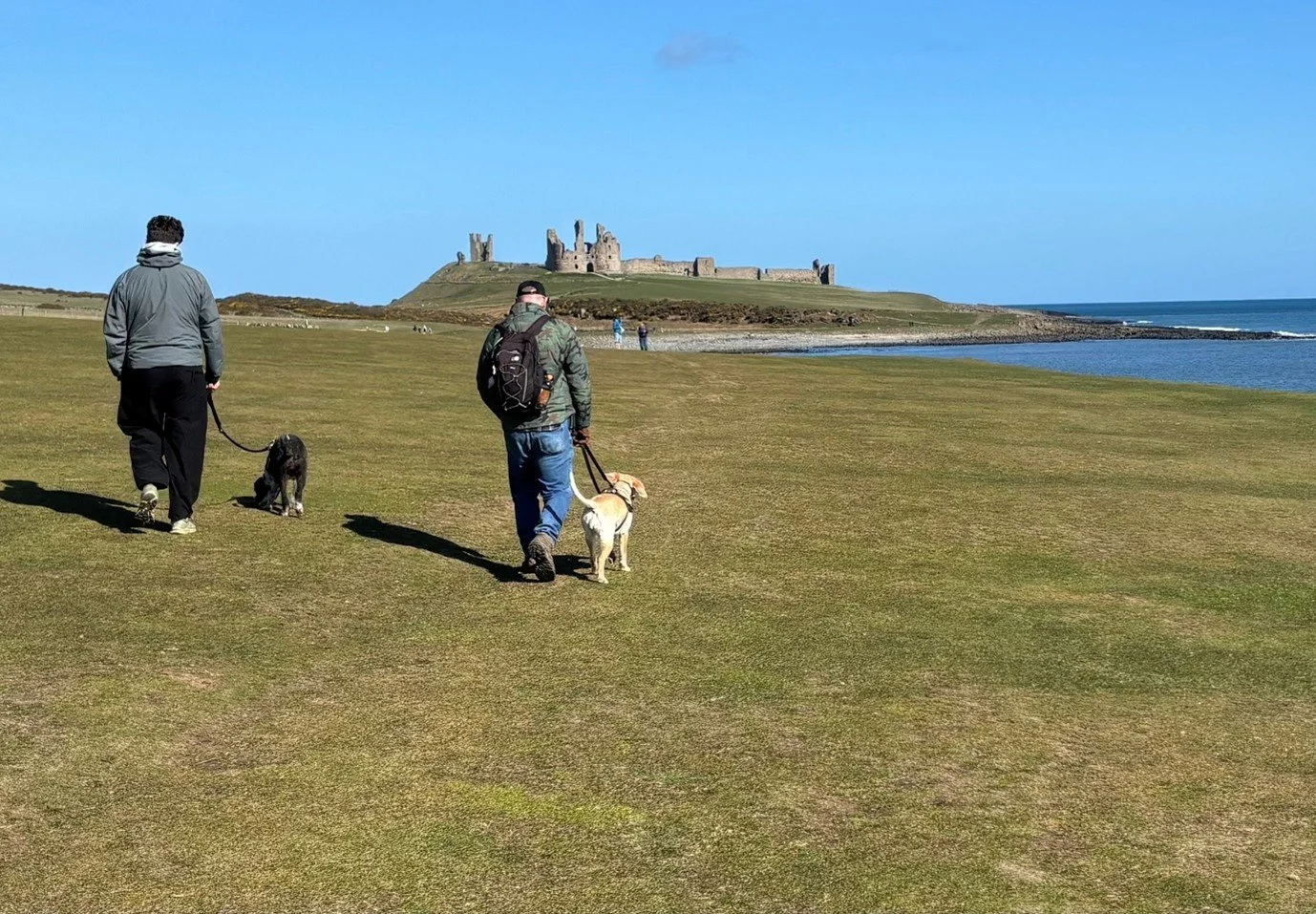
From Liese, shared in April following her surgery in November: “This is a photo that I took, last weekend, walking behind my son and husband and our dogs. I did a 5-mile hike which I really never thought I would be able to do again.”
Looking ahead
Since her surgery, Liese says one of her main takeaways is the importance of being more open about how she is feeling and not seeing that as a weakness. She is continuing with exercises and wants to use her experience to help others who may be facing pain, long waits or uncertainty of their own.
Her story is a reminder that support does not have to be complicated to be meaningful. At the right moment, practical tools, human encouragement and connection with others can make a real difference.
If you are living with hip or knee pain, the Hope Programme can offer practical tools, flexible support and chance to connect with others who understand.
Find out more or try it for yourself.