
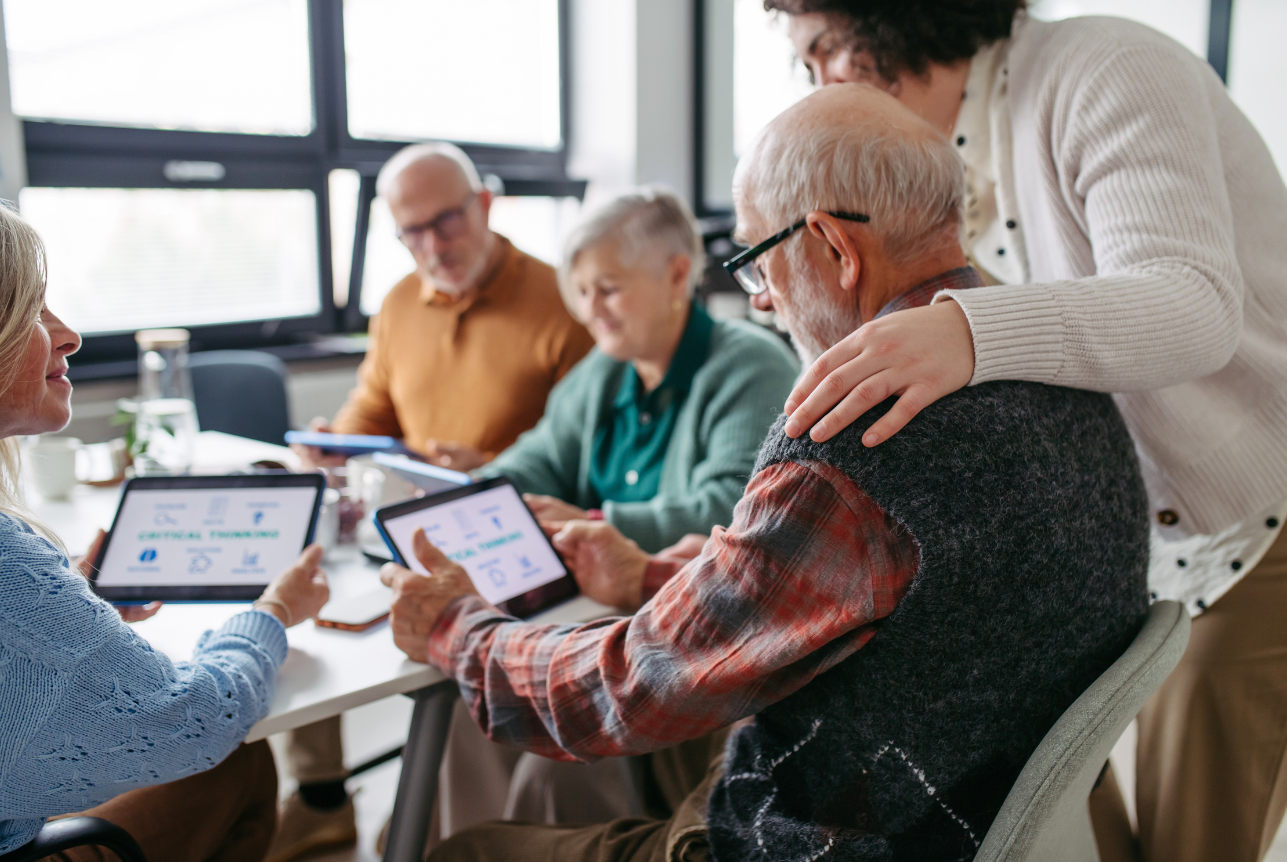
Tech for good
Digital. Health. Made simple.
Every year, millions are spent building digital health tools that get used once, then abandoned. This waste costs time, money—and opportunity. Powered by H4C® is a flexible no-code, white-label digital platform that lets social enterprises, charities, researchers and educators create and deliver digital programmes without needing to build or maintain their own tech. Already used across the UK and internationally, it helps reduce duplication, repurpose what works, and focus on what matters - people.
All-in-one solution
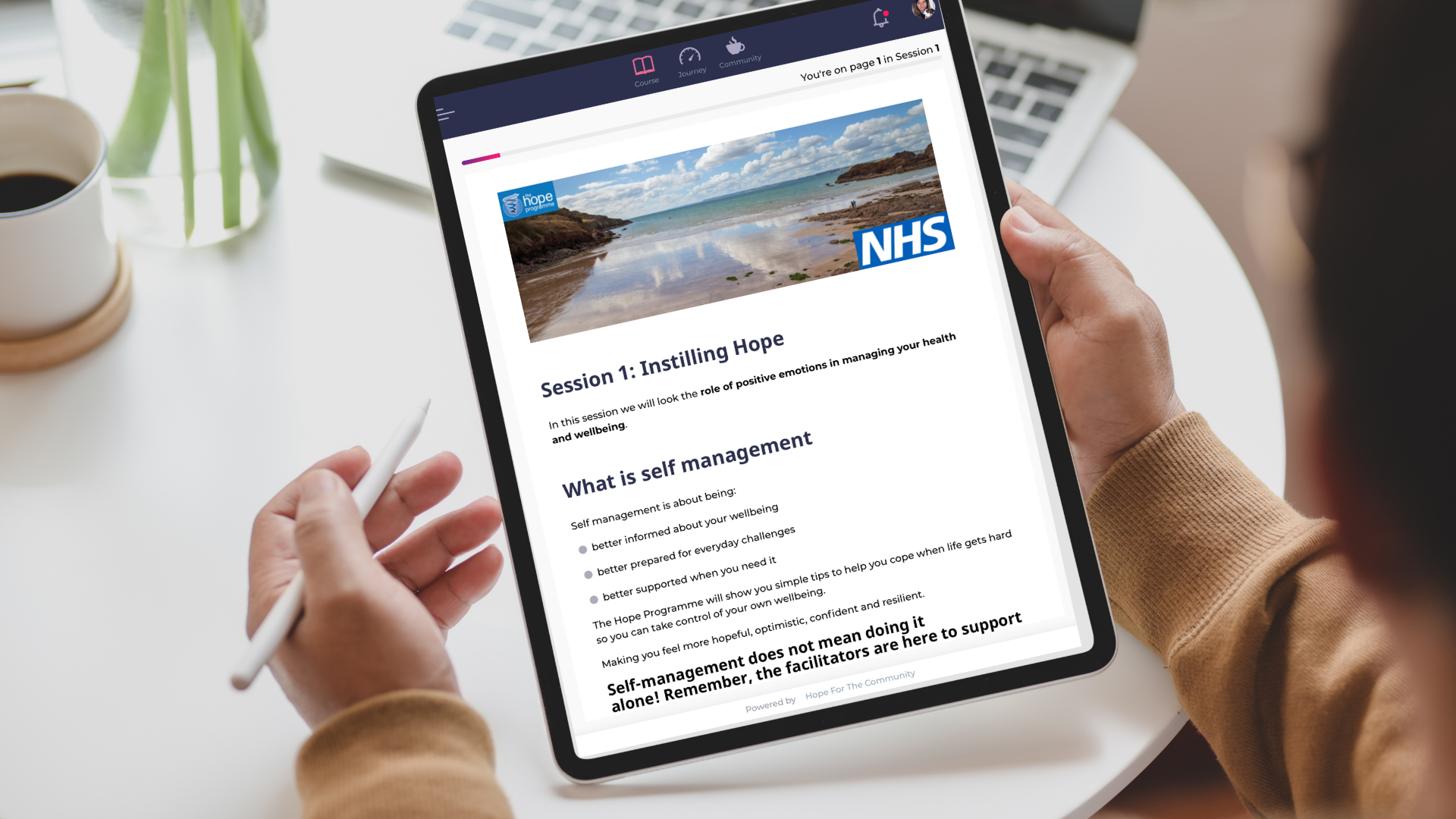
Easily build, test and deliver custom educational, health, or corporate wellbeing programmes, using evidence-based behavioural health and resilience tools, on a fully customisable white-label platform.
Have your own branded programme without the need to buy, set up, or manage tech infrastructure.
Content co-design tailored to your and your users’ needs. User experience (UX), user interface (UI), and agile software development to bring your vision to life.
-
Multiple conditions and interventions
Fully customisable
Flexible delivery (groups or individual)
Timed release, group-facilitated or self-guided
E-commerce via PayPal
Interconnectivity via API
-
Health coach moderated option
Symptoms tracking, journaling, goal setting and action planning
Bespoke exercise programme Edutainment
Social and peer support
Gamification
-
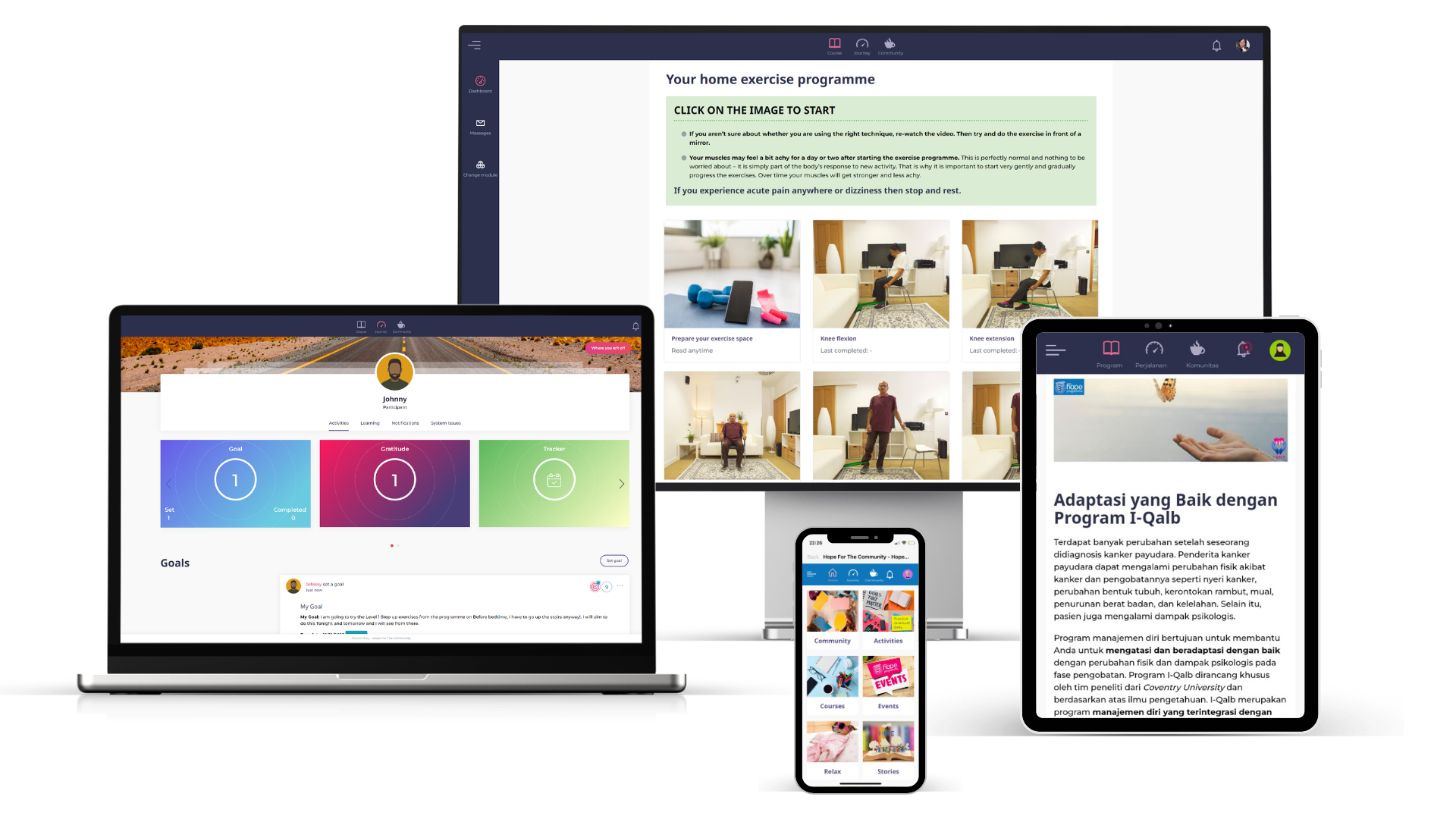
Multi-device
Progressive Webapp for offline and limited data usage
Personalisation
Translations
Programmes powered by H4C

Renew - Self-management course for young adult kidney transplant patient for improving treatment adherence.
Phoenix Course - Mindfulness-based course for self-management and peer support for endometriosis and adenomyosis.
Pause Grow Reflect - Self-care programme to help postgraduate students build own ‘self-care toolkit’ with strategies and techniques that will support them during the course of their PhD (and beyond).
Juggle - Space designed by students for students, to help them find the right balance between different aspects of student life.
Health at Home - Exercise programme to help overweight people get fitter and healthier all in the comfort of their own home.
Supporters of Survivors (SoS) - Collection of resources and tools for people who are helping a friend, family member or partner who has gone through sexual violence, rape, sexual assault or sexual abuse.
Taste & See - A church based programme to help people develop a healthy relationship with food
HOPE4ABI – Digital self-management of mental and sexual wellbeing for people with acquired brain injury.
Emerging minds - Resource for parents and carers of young people who self-harm.
Hope4Skizoprenia, Indonesia - Online support for people living with schizophrenia.
i-QALB, Indonesia - Online support for women living with breast cancer.
Shifa, Indonesia - Online integrated Islamic spiritual programme tailored for adolescents and young adults living with cancer.
Aksi Bergizi, Indonesia – Digital adaptation of UNICEF and Indonesian adolescent nutrition programme.
Hofstra University, USA Hope Programme - Online self-management course for parents and carers of children with autism.
ViBES, McMaster University Canada - Using Virtual Reality to Deliver Hope Programme for Patients diagnosed with Metastatic Breast Cancer, a self-management intervention.
HOPE4Partners - Support programme for Partners to help them navigate relationship change and intimacy after brain injury.