

“The evidence-base helps stamp a seal of academic rigour, authenticity and confidence in the efficacy of the programme”
— Helen Davies-Cox, Change Lead for Whole Population Personalised Care, Torbay and South Devon NHS Foundation Trust

empower people → improve outcomes → reduce demand
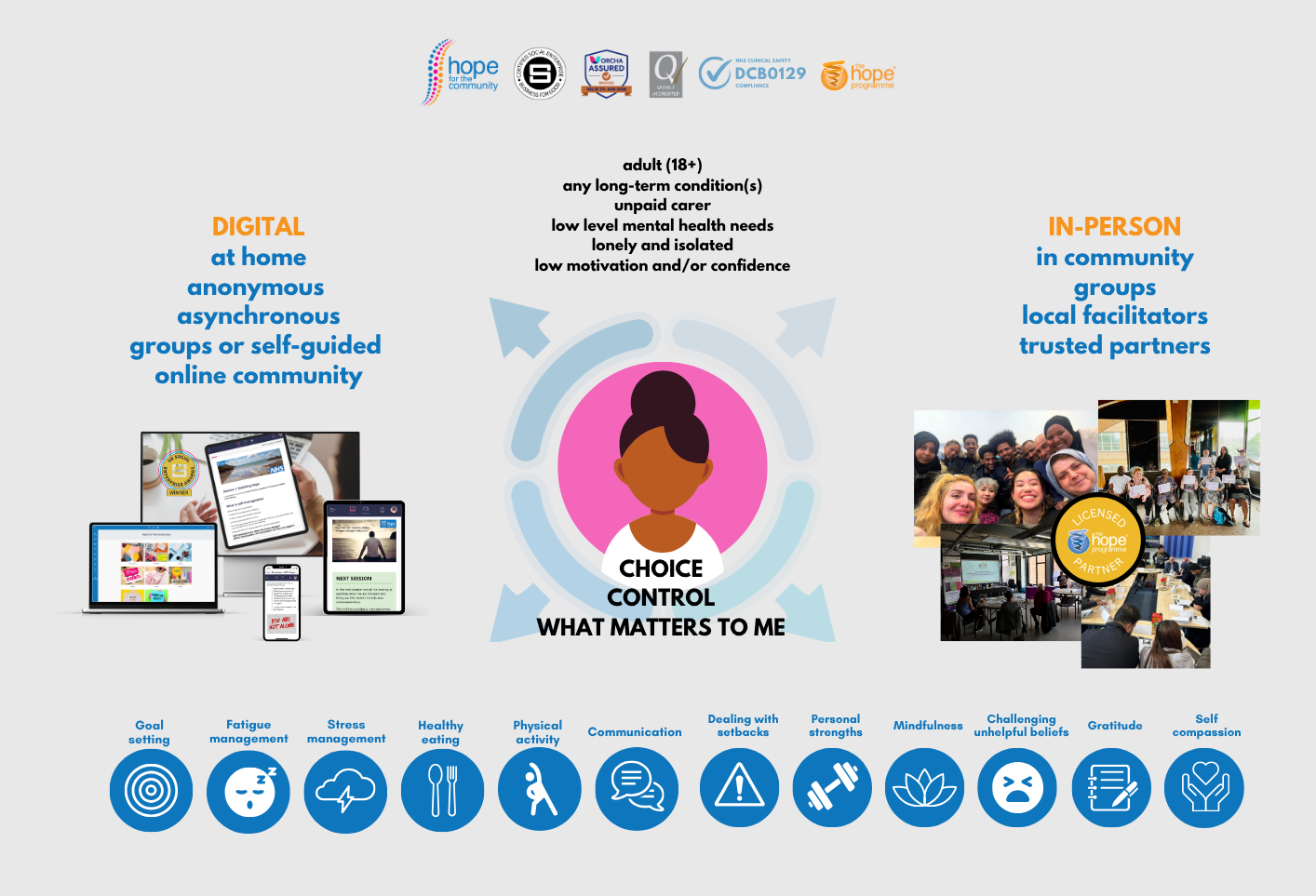
The HOPE (Help Overcome Problems Effectively) Programme® provides practical, evidence-based self-management support for people living with long-term physical or mental health conditions, carers and other communities.
It empowers people to build the knowledge, skills and confidence (also known as activation) to take control of their health and wellbeing and to live well, improving their wellbeing and helping them manage their health day to day, while reducing avoidable demand on health and care services. Developed through more than 25 years of research, the Hope Programme can be delivered digitally or in-person, in groups or through self-guided learning.
-
We are living longer but not always living well. 18 million adults in England live with long-term physical or mental health conditions. 1 in 4 of us are living with two or more health conditions, rising to 2 in 3 over the next 10 years.
Alongside clinical care, people often want support with managing both their physical and mental health, to feel better and less alone.
-
The Hope Programme complements clinical care by focusing on the person, not the condition – helping people build on their strengths, manage symptoms, deal with setbacks, and have healthier lifestyles.
HOPE combines all aspects of self-management (education, coaching, peer-support, tracking and more).
Course content includes goal-setting, gratitude, character strengths, mindfulness, managing stress and unhelpful thoughts, problem-solving, communication and planning for setbacks. These core activities are combined with content tailored to each condition or community.
Our participants call it “a toolkit for a healthy life”.
-
HOPE helps people improve mental wellbeing and develop the knowledge, skills and confidence to take an active role in their health and wellbeing. This is also known as patient activation.
People are supported to focus on what matters to them, set goals and take practical steps that fit around and help change their lives.
Self-management does not mean expecting people to do it alone. It means giving people practical tools, peer-support and confidence to manage at home, alongside their clinical care.
Hope Programme reaches people who would most benefit and increases their activation, creating savings through costs avoided, fewer GP or A&E visits, less do not attends and shorter hospital stays.
-
HOPE is licensed by public, charity or private sector organisations. It is free to users.
We can deliver the Hope Programme directly or train your staff and volunteers to facilitate courses within your own service or community.
Our train-the-trainer model includes facilitator training, programme materials, implementation support and quality assurance.
Our licensed partners include Help & Care in Dorset, My Health Devon and Volunteer Cornwall, supporting in-person delivery in their local communities. The Hope Programme for cancer is also delivered in-person through Macmillan Cancer Support centres across the UK.
We can also work with you and the people you support to tailor or co-design a programme for a particular community.
-
HOPE offers flexible delivery to suit different people, services and communities.
In person: facilitated sessions bring people together locally to learn, reflect and support one another.
Digital group-facilitated: people access the programme online while learning alongside others, supported by trained Hope facilitators.
Digital self-guided: people work through the programme independently, at a time and pace that suits them.
Ongoing support through an online community of people with lived experience.
Our online Hope Programme courses are delivered through our powered by H4C platform.
Delivery options can be used separately or combined as part of a blended offer. Train-the-trainer model enables local delivery and sustainability.
-
The Hope Programme is supported by more than 25 years of research, established quality processes and independent review.
Our digital programmes follow NHS clinical safety standards, including DCB0129 processes, and have been assessed against the Digital Technology Assessment Criteria.
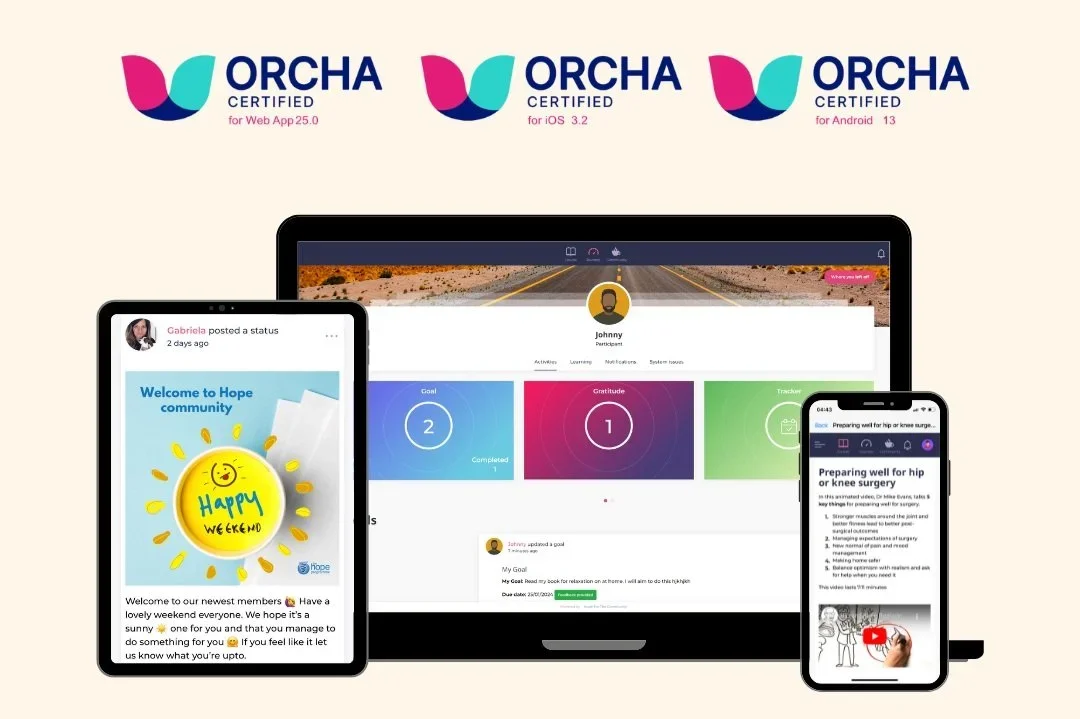
All our online Hope Programme® courses are ORCHA and QISMET accredited.
We have achieved ORCHA scores of 88% for its Android and iOS applications and 86% for its web application. The review considered areas including data protection, clinical assurance, usability and accessibility.
HOPE is included in ORCHA Verify.
Hope Programme offer
HOPE can be adapted for different health conditions, caring roles, life stages and communities. Explore our established Hope Programmes available to commission below.
Do not see the programme your community needs? We can work with you and the people you support to co-design an appropriate Hope Programme.
-
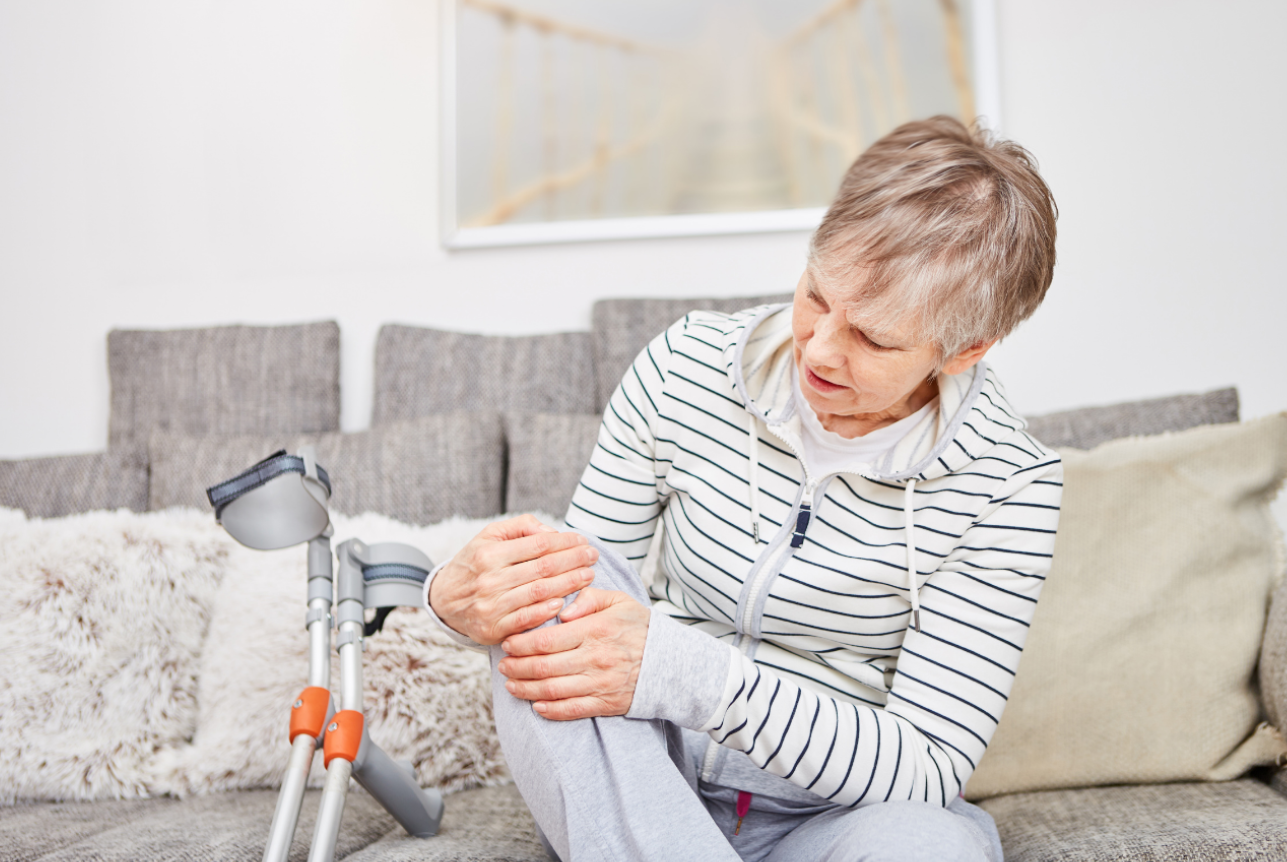
![Older woman sitting on a couch, holding her knee in pain, with crutches leaning next to her.]()
Osteoarthritis and hip or knee pain
-
![Woman with short brown hair and glasses looking at a laptop screen, wearing a white shirt and brown cardigan, against a plain white wall.]()
Idiopathic intracranial hypertension
-
![A young woman sitting on a couch, looking at her phone with a bored or tired expression, resting her head on her hand.]()
Polyendocrine metabolic ovarian syndrome (formerly PCOS)
-
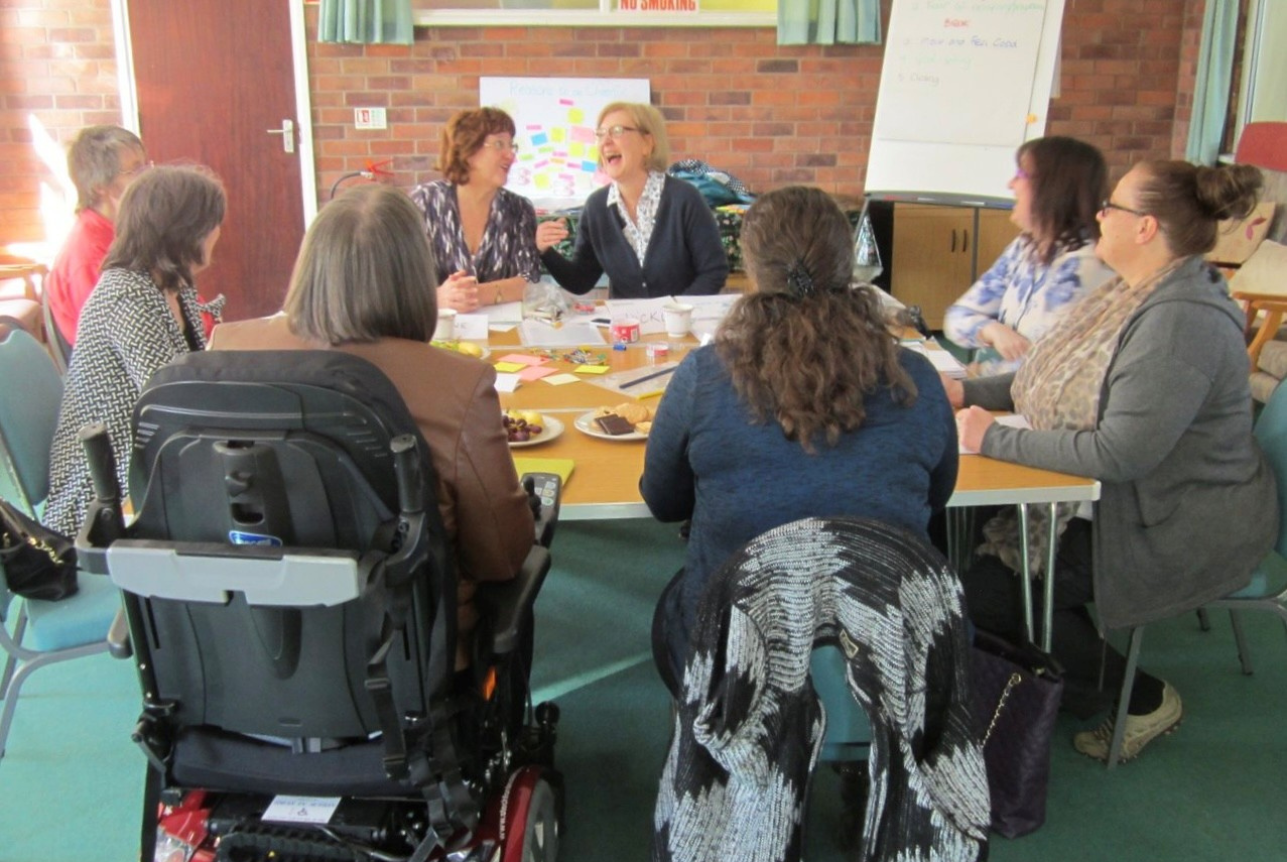
![Group of women gathered around a table in a meeting room, laughing and engaging in conversation, with snacks and papers on the table.]()
Multiple sclerosis
-
![An elderly man and woman sitting on a couch, looking at a tablet and smiling together in a cozy living room.]()
Any long-term condition
-
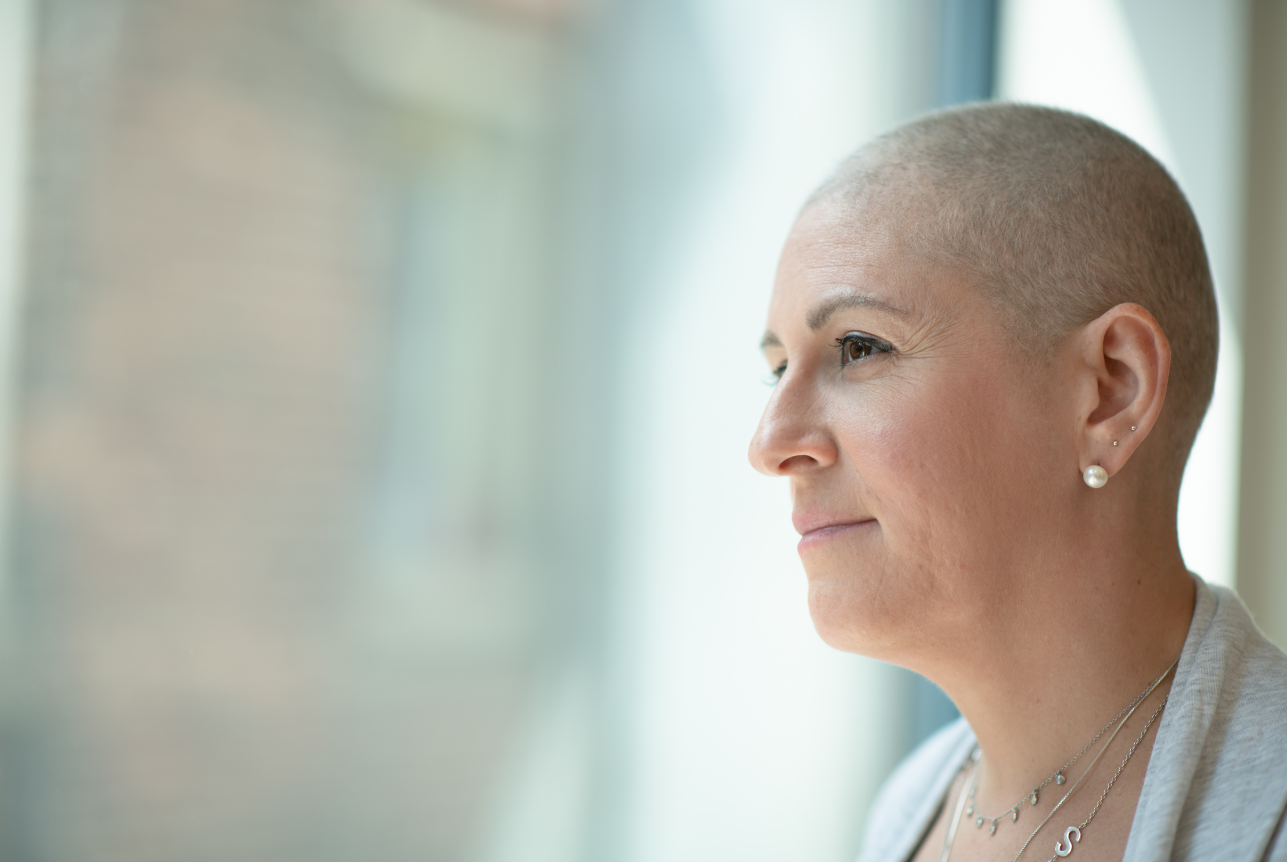
![Side profile of a woman with a shaved head wearing pearl earrings, looking out a window with a calm expression.]()
Cancer
-
![A man with dark hair tied back wearing a teal face mask outdoors, with blurred green and yellow trees in the background.]()
Long Covid
-
![Firefighters in safety gear, including helmets and jackets, engaged in a discussion on a city street, with emergency vehicles and bystanders in the background.]()
Firefighters (emergency services)
-
![Businesswoman in a suit looking at her tablet in an office with colleagues in the background.]()
Workplace wellbeing
-
![A young woman and an elderly man sitting on a park bench, smiling at each other during daytime.]()
Carers
-
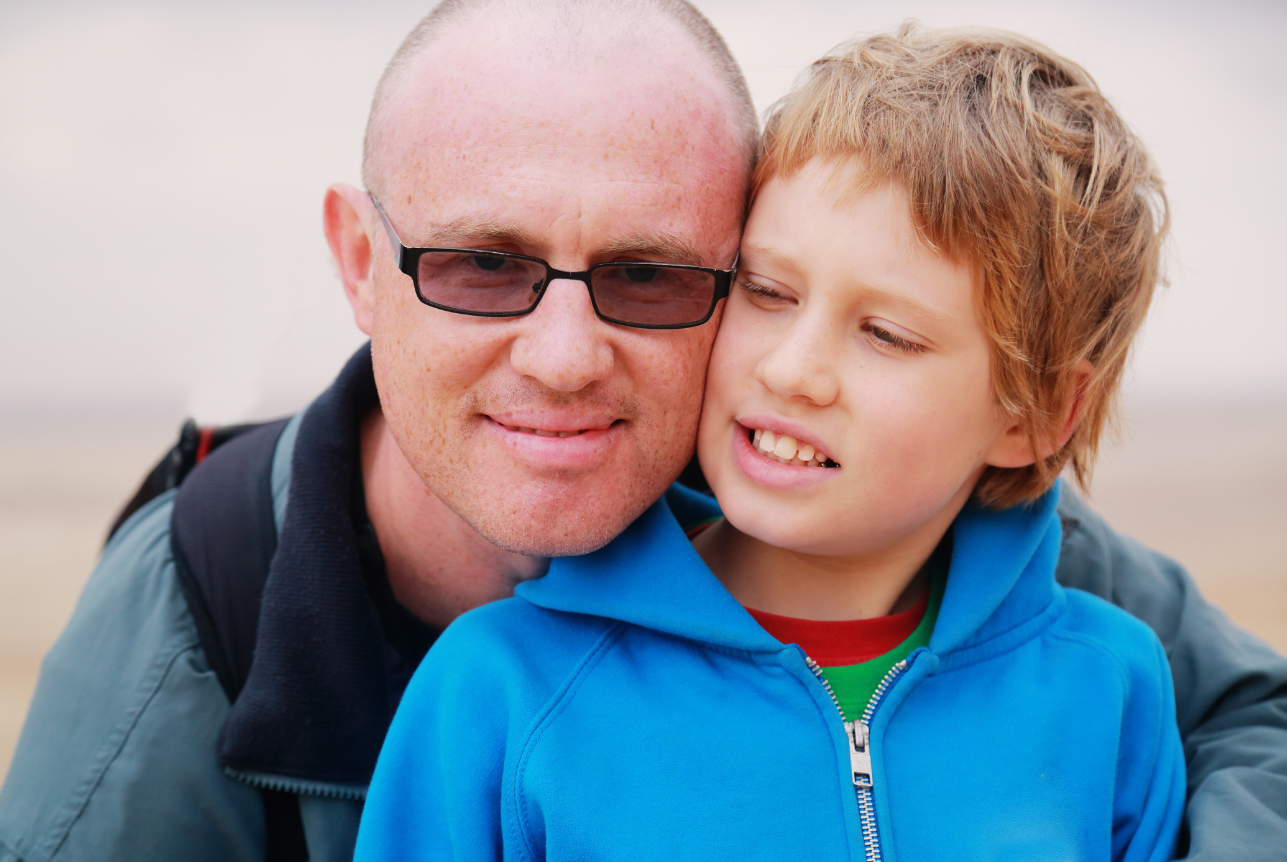
![A man with short hair, wearing glasses and a gray jacket, smiling as he leans close to a young boy with light brown hair wearing a bright blue hoodie.]()
Parents of autistic children
-
![Young girl with a shaved head smiling joyfully while hugging and leaning her forehead on an adult man's shoulder, indoors with soft natural light.]()
Parents of children with cancer
-
![A visually impaired man smiling with eyes closed, holding a mug in one hand and a guide cane in the other, with a large green plant in the background.]()
Sensory loss
-
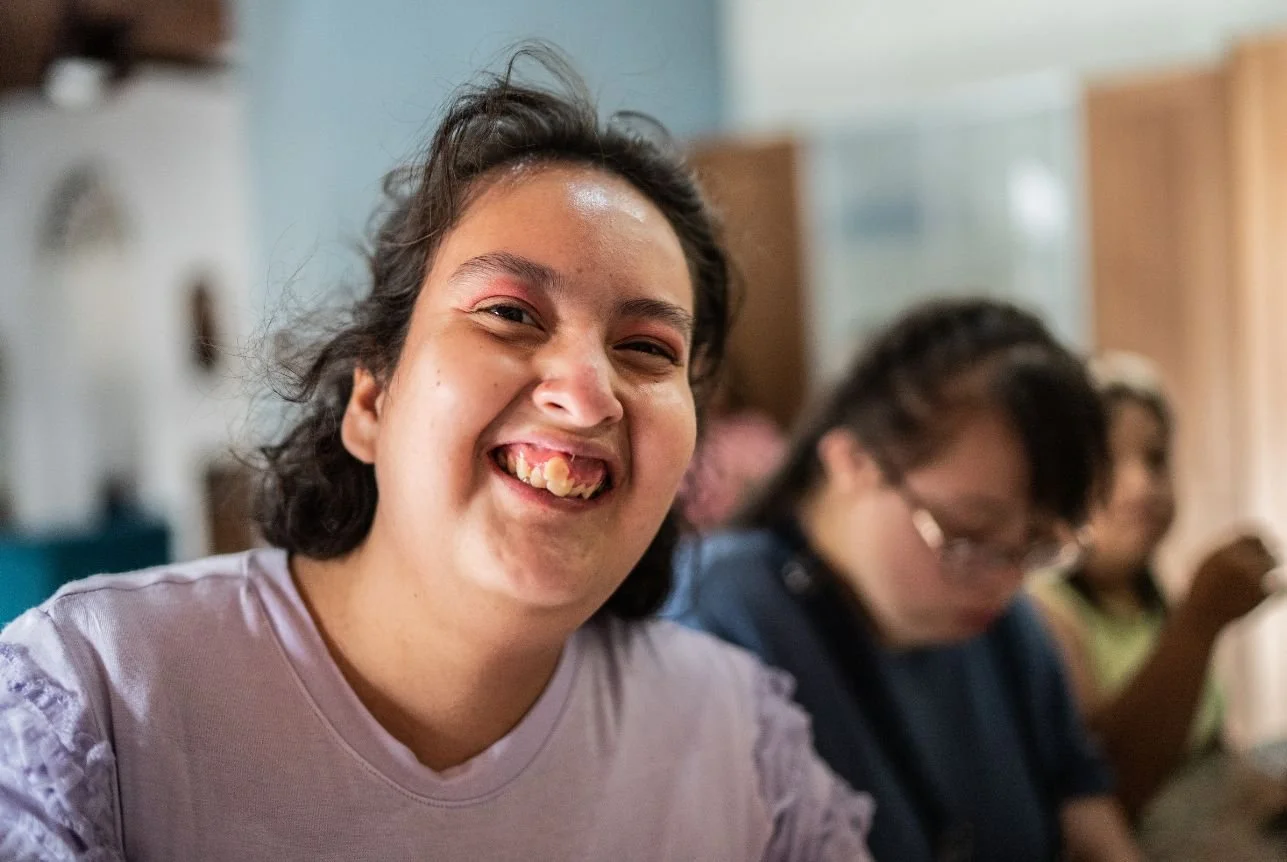
![A woman with a big smile, sitting at a table in a casual indoor setting, with two other women in the background.]()
Learning disability
-
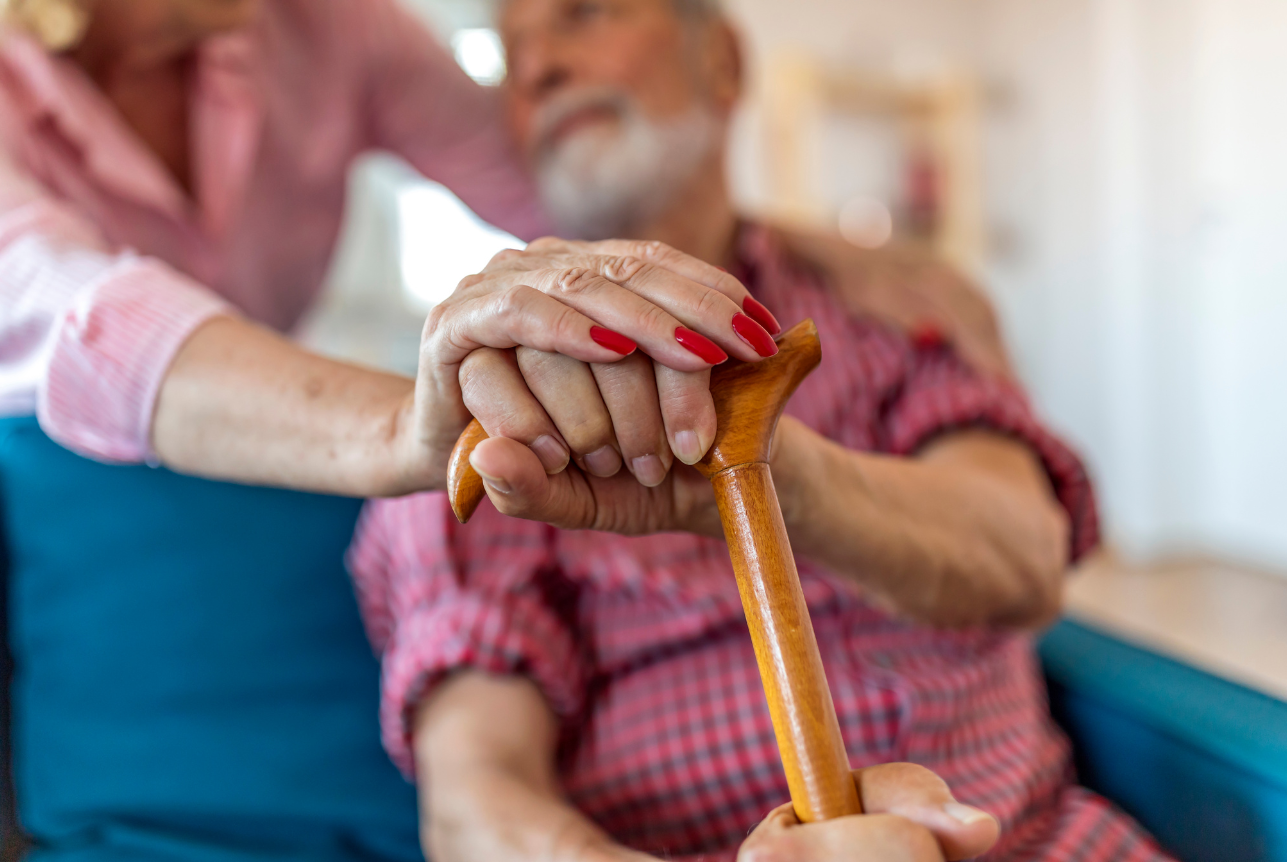
![A senior woman supporting an elderly man with a cane at home.]()
Dementia
-
![Close-up of Hope Programme logo with orange text and design on a white background, partially visible.]()









“The Hope Programme has enabled us to bring trusted support to thousands of people across the South West. Our partnership with H4C helps more people manage their health closer to home and live more hopeful lives.”
— Paul Spencer, Primary and Community Development Lead, NHS England South West

Research driven impact
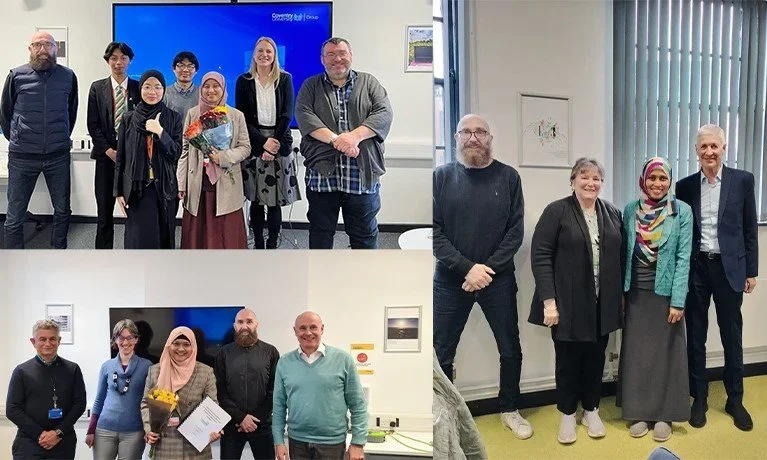
The Hope Programme has been developed and evaluated through more than 25 years of research, including a longstanding partnership with Coventry University.
Backed by experts in co-design, self-management, psychology and digital health, we deliver successful outcomes through robust evidence-based programmes, empowering people to take control of their health and wellbeing and reducing demand on services.
16 published peer-reviewed studies have shown that the Hope Programme improves outcomes which are important to participants including mental wellbeing, depression, anxiety, confidence to manage, hope and gratitude.
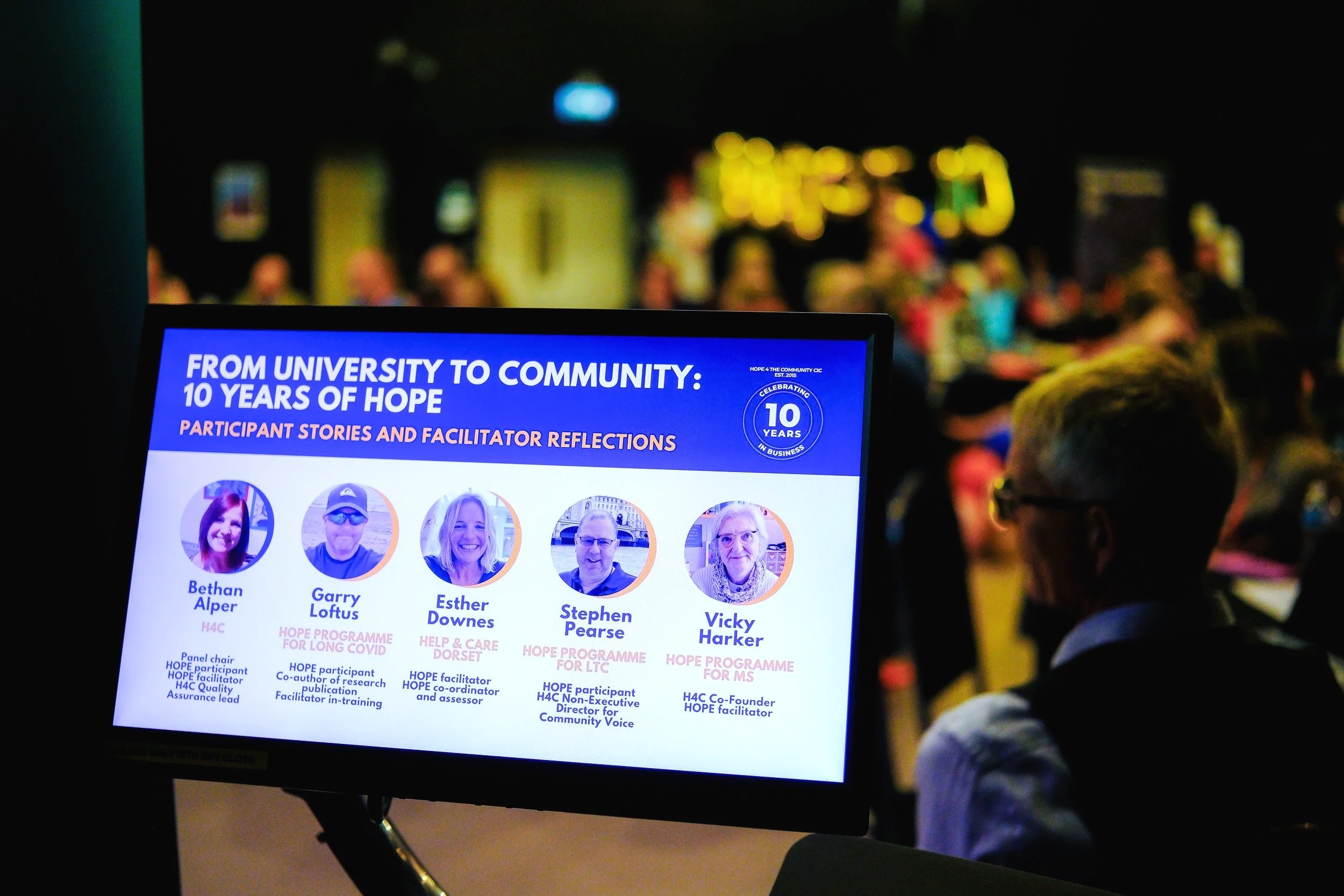
Co-design and lived experience
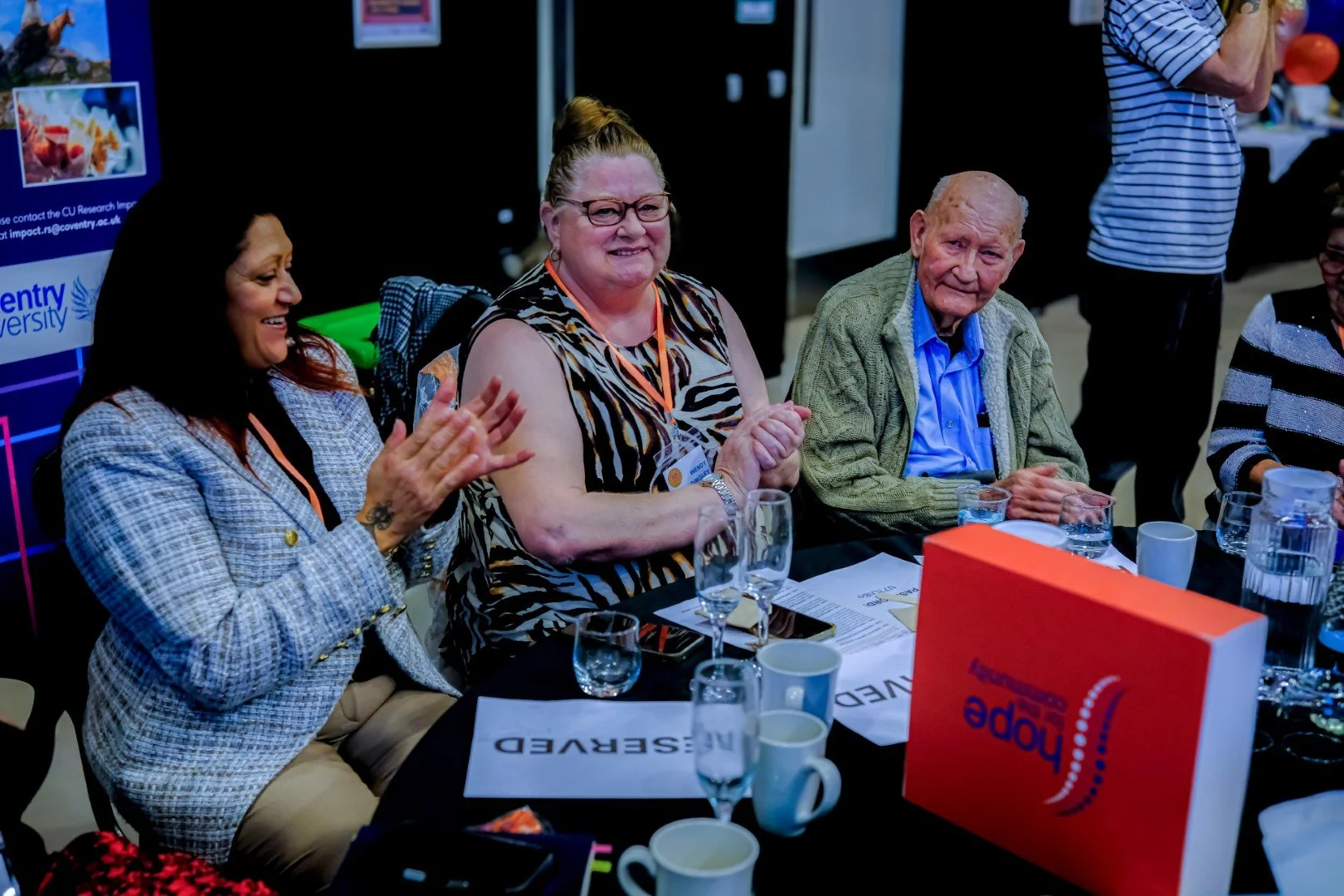
Our programmes are designed with people who have lived experience, alongside researchers and healthcare professionals.
Their knowledge helps shape the content, language and delivery, so the support is practical, relevant and culturally appropriate. Our licensed partners help us spread Hope, understand local needs and ensure the Hope Programme works for the communities they support.Impact and social value
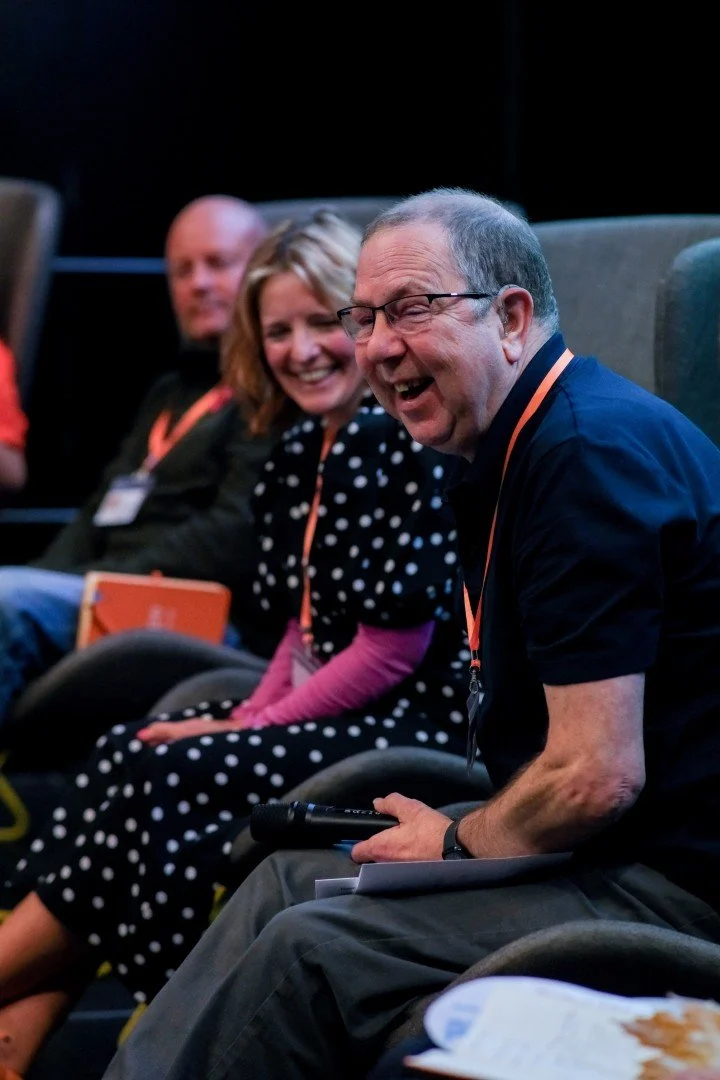
Alongside wellbeing outcomes we also focus on the wider social value we create.
We employ people with long-term conditions, work with social and local suppliers and re-invest our profits into our social mission. This helps our partners understand the full difference their investment makes to people, communities, environment and the local economy.
Research publications
-
Turner, A & Martin .F. Spreading HOPE (2017). The Development of a Hope-Based Self-Management Intervention in. Matz, E ( Eds) Promoting self-management of chronic health conditions: Theories and practice.Oxford University Press 58-79.
-
Wright H, Martin F, Clyne W, Clark C, Matouskova G, McGillion M, Turner A. A Digital Self-management Program (Help to Overcome Problems Effectively) for People Living With Cancer: Feasibility Randomized Controlled Trial J Med Internet Res 2021;23(11):e28322 URL: https://www.jmir.org/2021/11/e28322 DOI: 10.2196/28322
Martin F, Wright H, Moody L, Whiteman B, McGillion M, Clyne W, Pearce G, Turner A. Development and Evaluation of a Digital Self-Management Programme: iHOPE for Cancer Survivors. J Med Internet Res 2020;22(5):e17824 URL: https://www.jmir.org/2020/5/e17824 DOI: 10.2196/17824 PMID: 32209529 PMCID: 7268001
Pearce G, Parke HL, Pinnock H, et al. The PRISMS taxonomy of self-management support: derivation of a novel taxonomy and initial testing of its utility. Journal of Health Services Research & Policy. 2016;21(2):73-82. doi: 10.1177/1355819615602725
-
Martin F. Wait-list control study of a digital CBT informed self-management intervention for Long COVID; 51st BABCP Annual Conference (July 2023)
Wright H, Turner A, Ennis S, Percy C, Loftus G, Clyne W, Matouskova G, Martin F. Digital Peer-Supported Self-Management Intervention Codesigned by People With Long COVID: Mixed Methods Proof-of-Concept Study. JMIR Form Res. 2022 Oct 14;6(10):e41410. doi: 10.2196/41410. PMID: 36166651; PMCID: PMC9578526.
-
Percy C, Turner A, Orr C. Developing a Novel Web-Based Self-Management Support Intervention for Polycystic Ovary Syndrome: Mixed Methods Study With Patients and Health Care Professionals. JMIR Form Res. 2024 Mar 7;8:e52427. doi: 10.2196/52427. PMID: 38451567.
Percy C, Turner A, Alper B, Wark P. Exploring Proof of Concept for a Novel Web-Based Self-Management Support Intervention for Polycystic Ovary Syndrome: Multimethod Study JMIR Form Res 2026;10:e69206 URL: https://formative.jmir.org/2026/1/e69206 DOI: 10.2196/69206
Percy C, Turner A et al. A feasibility trial of the digital Hope Programme for adults with polycystic ovary syndrome (Hope PCOS), ISRCTNISRCTN17639209 DOI https://doi.org/10.1186/ISRCTN17639209
-
Sari SP, Martin F, Lycett D, Turner A. Feasibility and preliminary findings of the digital self-management program for people with schizophrenia in Indonesia. Asian J Psychiatr. 2025 Aug;110:104568. doi: 10.1016/j.ajp.2025.104568. Epub 2025 Jun 2. PMID: 40494266.
-
Martin, F., Turner, A., Wallace, L. M., Stanley, D., Jesuthasan, J., & Bradbury, N. (2015). Qualitative evaluation of a self-management intervention for people in the early stage of dementia. Dementia (London). 2015 Jul;14(4):418-35. doi: 10.1177/1471301213498387. Epub 2013 Aug 12.cription
Martin, F., Turner, A., Wallace, L. M., Bradbury N. (2013) Conceptualisation of self-management intervention for people with early stage dementia. Eur J Ageing. 2012 Nov 7;10(2):75-87. doi: 10.1007/s10433-012-0253-5. eCollection 2013 Jun.
Martin, F., Turner, A., Wallace, L.M., Choudhry, K.& Bradbury, N. (2012) Perceived Barriers to Self-Management for People with Dementia in the Early Stages. Dementia: The International Journal of Social Research and Practice 12 (4): 481-493.DOI: 10.1177/1471301211434677
-
Kosmala-Anderson, J Turner, A. & Clyne, W. (2016) Evaluation of the effectiveness of HOPE self-management programme for people living with multiple sclerosis. Disabil Rehabil. 2017 Jun;39(11):1114-1121. doi: 10.1080/09638288.2016.1181211. Epub 2016 Jun 9.
-
Wright, H., Walker-Clarke, A., Drummond, A. et al. Self-directed versus peer-supported digital self-management programmes for mental and sexual wellbeing after acquired brain injury (HOPE4ABI): protocol for a feasibility randomised controlled trial. Pilot Feasibility Stud 9, 194 (2023). https://doi.org/10.1186/s40814-023-01421-z
-
Hergenrather KC, Geishecker S, Clark G, Rhodes SD. (2013) A pilot test of the HOPE Intervention to explore employment and mental health among African American gay men living with HIV/AIDS: results from a CBPR study. AIDS Education and Prevention: AIDS Educ Prev. 2013 Oct;25(5):405-22. doi: 10.1521/aeap.2013.25.5.405.
-
Horton E, Wright H, Turner A, Moody L, Aphramor L, Carlson A, Ghiasvand H, Palmer S Using a Co-Designed Digital Self-Management Program to Prepare Patients for Hip or Knee Replacement Surgery: Pragmatic Pilot Study. JMIR Rehabil Assist Technol 2026;13:e68286 URL: https://rehab.jmir.org/2026/1/e68286 DOI: 10.2196/68286
-
Kim Bul, Hayley Wright, Faith Martin, Gemma Cartwright, Cain Clark, Wendy Clyne, Gabriela Matouskova, Andy Turner Feasibility Randomised Controlled Trial of the online Hope Programme for Parents of Autistic Children during COVID-19; EHPS 2021, 35th Annual Conference of the European Health Psychology Society (August 23 – August 27, 2021)
Martin, F., Pearce, G., Clyne, W & Turner A. Self-management support intervention for parents of children with developmental disorders: The role of gratitude and hope. Journal of Child and Family Studies, 28(4), 980-992 (2019) doi10.1007/s10826-018-01308-1
Tech for Good: Technology Social Enterprise of the Year 2024
